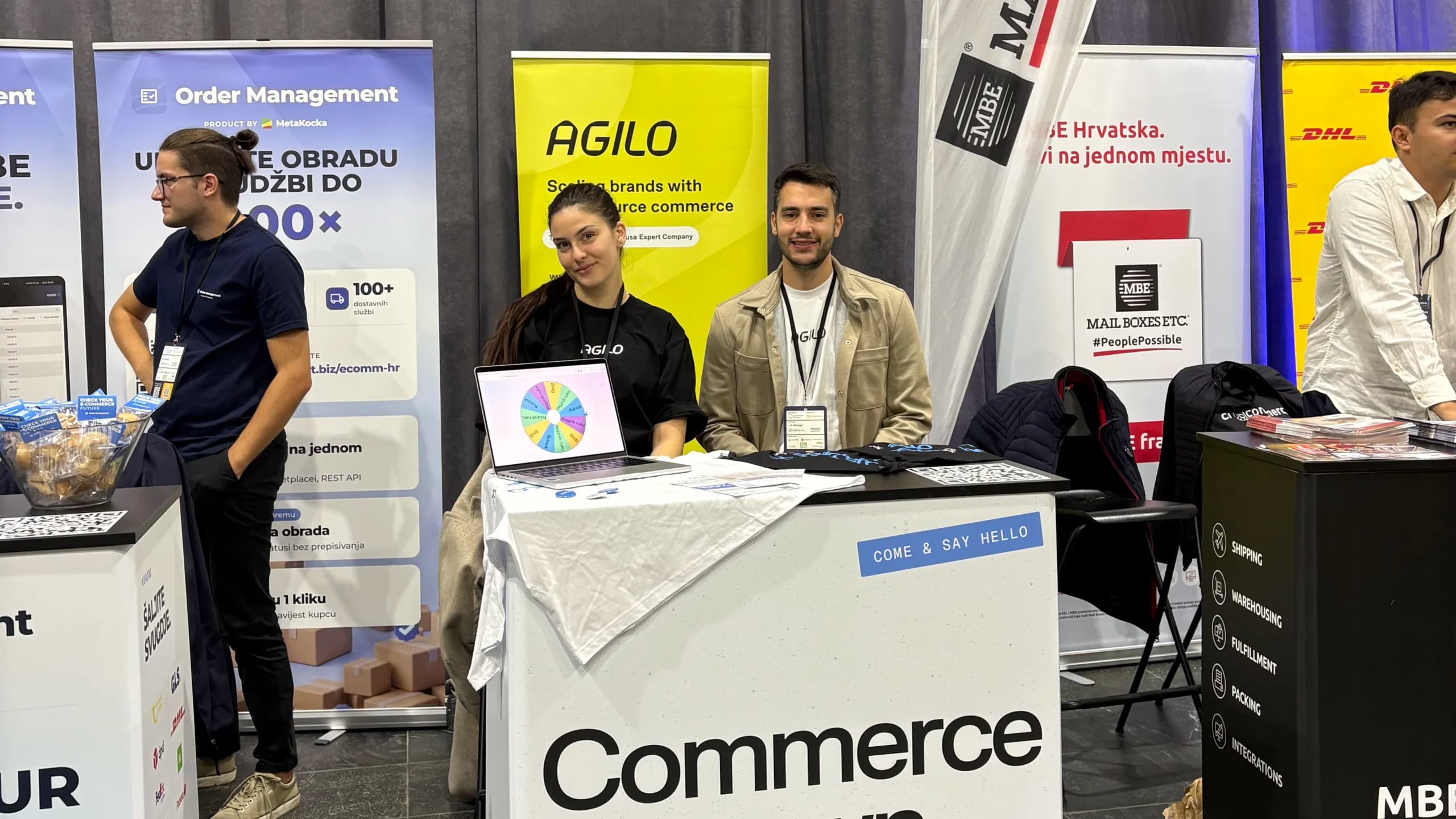
On October 13, we brought Medusa to CRO Commerce 2026 in Zagreb. Now in its eighth edition, the conference organized by eCommerce Croatia, the country’s leading ecommerce association, drew more than 500 people from the regional ecommerce scene to the Mozaik Event Center, with talks and panels across three stages. We came as a sponsor and Medusa’s first solution partner, with three words on our booth: commerce you own.
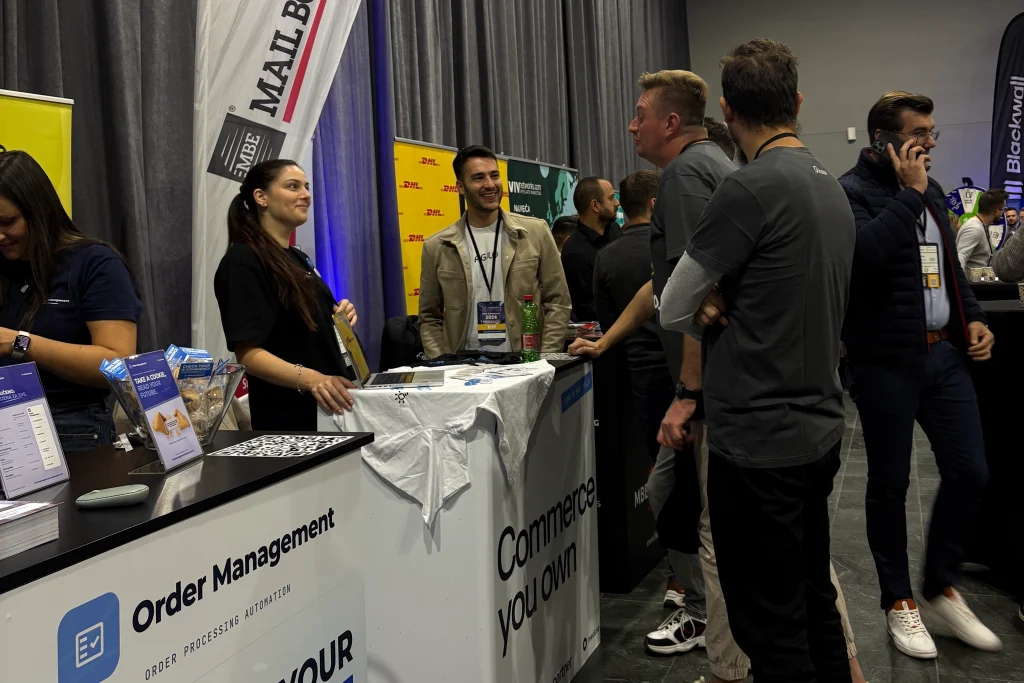
All day, we ran live demos of the Medusa admin, walked visitors through real projects, and talked with teams running WooCommerce, Shopify, and Magento about what owning their platform would actually look like.
CRO Commerce 2026 in short
- We demoed the Medusa admin on our fashion starter several times during the day.
- The best conversations were with teams on WooCommerce, Shopify, and Magento who are starting to feel the limits.
- Five talks on stage made the same case from different angles: shoppers want options, data is infrastructure, and you can only improve what you can test.
The demo: what owning your platform looks like
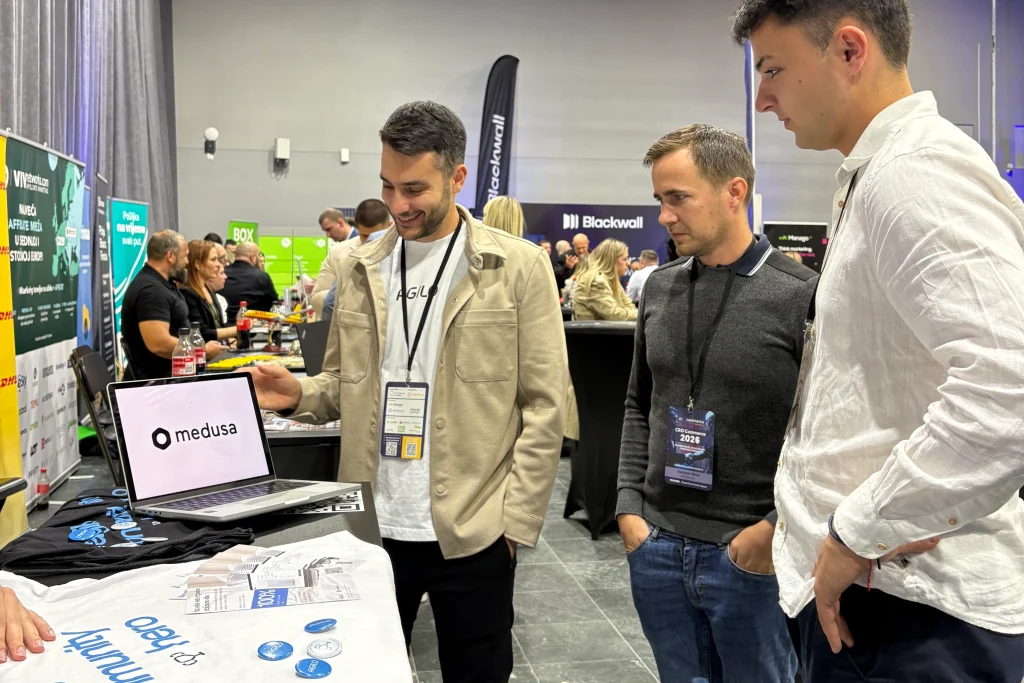
Several times during the day, we gave a short Medusa presentation followed by a live demo of the Medusa admin dashboard on our fashion starter. Products, orders, and customers, all managed in a clean, open-source admin. Seeing it on screen made the idea of owning your platform far more concrete than any slide could.
Since 2008, Agilo has been building B2B and B2C commerce platforms. Today we build them on Medusa, the open-source commerce engine. We built the demo around three points:
- Your data and workflows stay yours. Catalog, orders, customers, and business logic run on infrastructure you control, not inside a rented black box.
- Custom flows without fighting the platform. B2B pricing, marketplaces, rentals, omnichannel POS, and ERP syncs are built around the business, not squeezed into templates.
- A base that lasts. You can launch a first version quickly and keep improving it for years without rebuilding the foundation.
What webshop teams ask us about Medusa
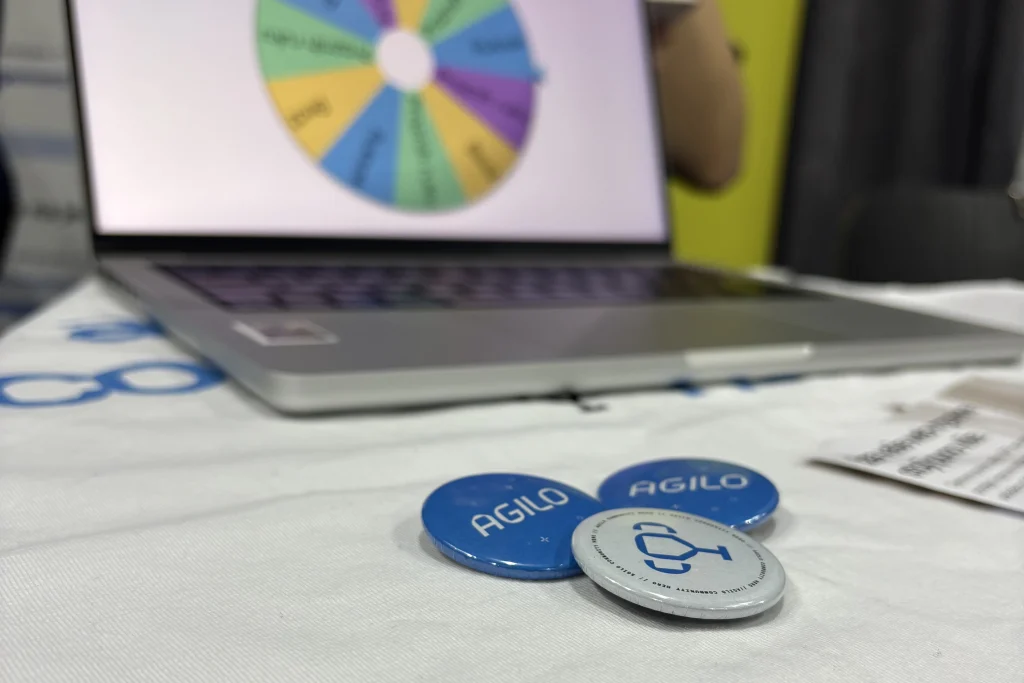
The lucky wheel brought people to the booth. Visitors spun it to win personalized Agilo prizes, and a quick spin often turned into a proper conversation. A few fellow exhibitors stopped by too, curious about who we are and what we do.
At CRO Commerce, the conversations we valued most were with teams already running a webshop on WooCommerce, Shopify, or Magento. These are the questions they ask us most, at the booth and in sales calls.
How long does it take to migrate from Shopify to Medusa?
It depends on three things: how many products and variants you have, how many integrations need to move (ERP, PIM, payments, shipping), and how much custom logic your store runs on. Across the migrations we have run, a store with a standard catalog and a few integrations usually lands in 4 to 8 weeks; B2B pricing, marketplaces, and complex ERP syncs take 2 to 4 months or more, and the integrations are what drive the timeline.
We usually split it into phases: catalog and data migration, storefront, integrations, then a parallel run before switching traffic. That way you launch on a working platform, not a promise.
Can we move our products, customers, and orders?
Yes. Products, variants, prices, images, inventory, and collections can be pulled from Shopify’s API into Medusa, and the import can be re-run safely until launch day. We can also migrate customers and order history, with a bit more mapping work.
One thing to plan for: Shopify does not export customer passwords. Customers set a new password the first time they log in, so we’ll prepare a short email explaining it.
Will we lose our Google rankings after migrating?
Not if the migration is planned. We map every old URL to its new one with 301 redirects, keep product handles where possible, carry over titles, meta descriptions, and structured data, and submit the new sitemap in Search Console on launch day.
A short dip in the first weeks is normal on any replatforming. What causes lasting damage is missing redirects, and those are a checklist item, not luck.
How much does Medusa cost compared to Shopify Plus?
Medusa itself is open source under the MIT license, so there is no license fee and no percentage of your sales going to the platform. You pay for hosting, either on your own infrastructure or on Medusa Cloud, and for building and improving the store.
The real comparison is total cost over three to five years: platform subscription, app fees, and the workarounds you pay for when the platform cannot do what you need.
Do we need our own developers to run Medusa?
No. Your team runs the store day-to-day from the Medusa admin: products, orders, customers, and promotions. We handle development, hosting setup, and ongoing improvements.
If you have developers, Medusa is built on Node.js and TypeScript so that they can work on it directly. Many of our clients mix both.
Can Medusa handle B2B pricing and multiple markets?
Yes, and this is where it shines compared to template platforms. Medusa supports regions with their own currencies, taxes, and payment providers, plus price lists and customer groups for B2B pricing.
Anything beyond that, such as quote flows, approval chains, or company accounts, is built as a module around your process instead of bolted on with apps.
Can we keep our ERP, PIM, and payment providers?
In most cases, yes. Medusa connects to external systems through modules and workflows, so your ERP, PIM, payment, and shipping providers stay in place and sync with the store.
We map every integration early in the project. It usually drives the timeline, so we would rather know in week one.
Is migrating from WooCommerce or Magento any different?
The approach is the same: move the data, rebuild the storefront, reconnect the integrations, redirect the URLs. The difference is in the data. Magento stores often carry years of custom attributes and extensions that need cleaning up, and WooCommerce data often lives partly in plugins.
Either way, a migration is a good moment to drop what you no longer use. Most teams end up with a simpler catalog than they started with.
These are the conversations we want to keep having. If yours is not on the list, ask us.
Real projects we walked through
Real examples make ownership easier to understand. We walked visitors through two of ours:
- TEKLA, and its move from pure DTC to omnichannel retail.
- Viessmann, and the composable marketplace we built for them on Medusa.
With each team, we also talked through what a migration to Medusa would involve for their own store.
What the stage confirmed
Between demos at CRO Commerce, we sat in on as many talks as we could. Five stood out, and all of them touched on the same problem we hear from webshop teams every day.
AI agents are traffic too
“Everything is traffic: security and trust in the age of intelligent traffic” · Francisco Carvalho (Blackwall) and Ivan Čačija (Fastserver.hr) · Blackwall stage
Every visit to a webshop is traffic, whether it comes from a customer, a search crawler, or a malicious bot. Bots inflate numbers without ever buying, slow stores down, and put customer data at risk. The advice: stop advanced bots early and build infrastructure that stays stable under peak load.
The second half turned to what visitors want: AI assistants and agents that shop on a customer’s behalf. To be chosen by them, a store needs detailed, structured product data, current stock and pricing, and a good reputation beyond its own site.
Clean, structured, real-time data serves people and agents alike. That’s why we shipped WebMCP in our fashion starter before the platforms caught up.
Missing delivery options cost you the sale
“Your webshop is growing. Can logistics keep up?” · Petar Šimunić (euShipments) · Manago AI stage
Original title: “Webshop vam raste. Može li ga logistika pratiti?”
Petar’s message was simple: fix logistics before peak season, not during it. In euShipments’ data, 71% of abandoned checkouts happen because the shopper’s preferred delivery option is missing.
- East and West buy differently. Cards dominate in the West. Cash on delivery still drives conversions in the East. Petar cited 18% of growth coming from Eastern Europe.
- Systems protect people. Scanners, a mapped warehouse, and clear cutoff times reduce errors. In his example, better organization lifts a packer from 100 to 110-125 parcels a day without extra staff.
Delivery options, cash on delivery, and multi-currency look like logistics problems. They are platform problems too. With Medusa, they are modules you plug in, not features you wait for a vendor to ship.
The first answer is rarely the real one
“Your webshop is having a sales conversation. You can’t hear it.” · Ante Mihaljević · Blackwall stage
Original title: “Vaš webshop ima prodajni razgovor s kupcem. Samo ga vi ne čujete.”
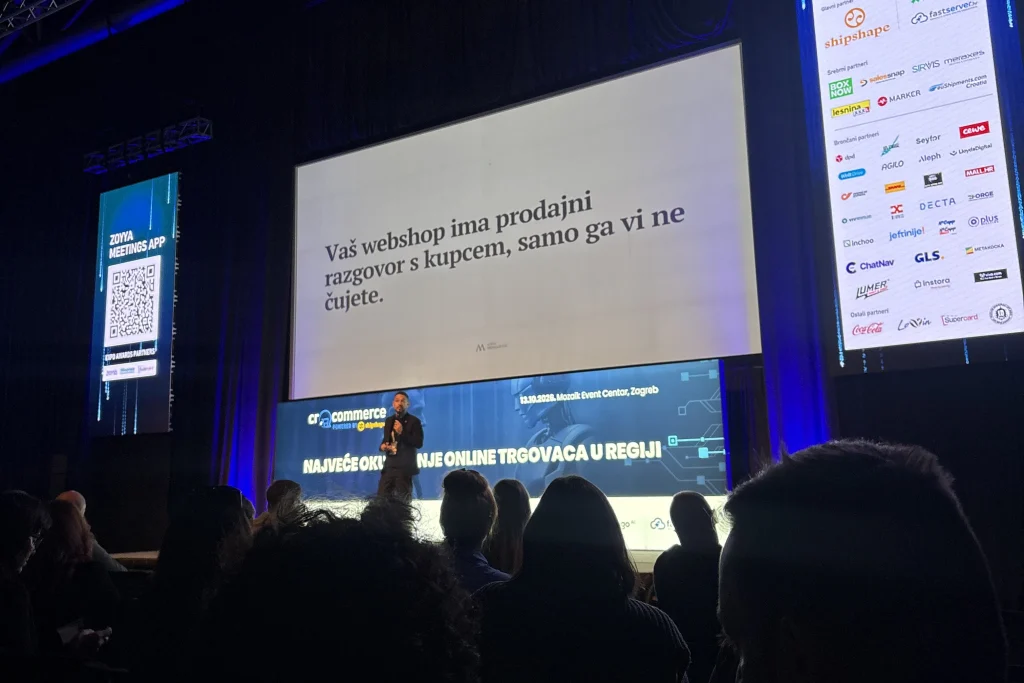
Ante started from a simple idea: it is impossible not to communicate. A store that says nothing about price, risk, or fit still sends a message, and shoppers fill the gaps themselves. Can I trust them? What if I choose wrong?
- Talk about the customer, not yourself. “Premium innovative solution made with passion” leaves shoppers asking where they fit in.
- Dig deeper. The first answer a customer gives is rarely the real motive. Follow-up questions get you there.
- Structure shapes value. The classic decoy: print for €6, digital for €4, print plus digital for €6. Suddenly the bundle is the obvious choice.
His practical step: interview real customers instead of guessing what matters to them.
Automation is where contacts turn into revenue
“From campaign to results: what’s behind successful automations” · Danijela Ljubinković (Sales Snap) · Manago AI stage
Original title: “Od kampanje do rezultata: Što stoji iza uspješnih automatizacija”
Danijela brought more numbers than anyone else that day, from two very different Serbian retailers: the kids’ chain Dexy Co and BENU, the country’s largest pharmacy chain.
- Make sign-up fun. A birthday wheel of fortune for Dexy Co collected about 27,000 contacts and led to 9,611 purchases.
- Put contacts to work. BENU’s abandoned-cart flow drove 569 purchases in Q2, and replenishment reminders arrive just before a product runs out.
- It adds up. Together, BENU’s automated campaigns delivered 9% of its online sales for the quarter.
We ran a lucky wheel at our booth that day to confirm the first point: people love to spin.
Most marketing tactics have never been tested
“The world’s biggest SEO meta study, told in 30 minutes” · Krešimir Ćorluka (Ovisy) · Manago AI stage
Original title: “Najveća SEO meta studija na svijetu, ispričana u 30 minuta (i kako iste podatke iskoristiti za svoj organski promet)”
Krešimir spent two months filtering roughly 300,000 documents down to 182 evidence-backed tactics. The humbling headline: of 769 tactics analyzed, 602 had no controlled test behind them, and none of the AI-optimization tactics had a controlled test proving they work.
What the evidence does support looks like good content practice. Articles with a named author had 113% more AI citations, and human editing of AI-written product copy was linked to 88% more conversions. Title tags are among the easiest things to test in isolation. In Ovisy’s tests:
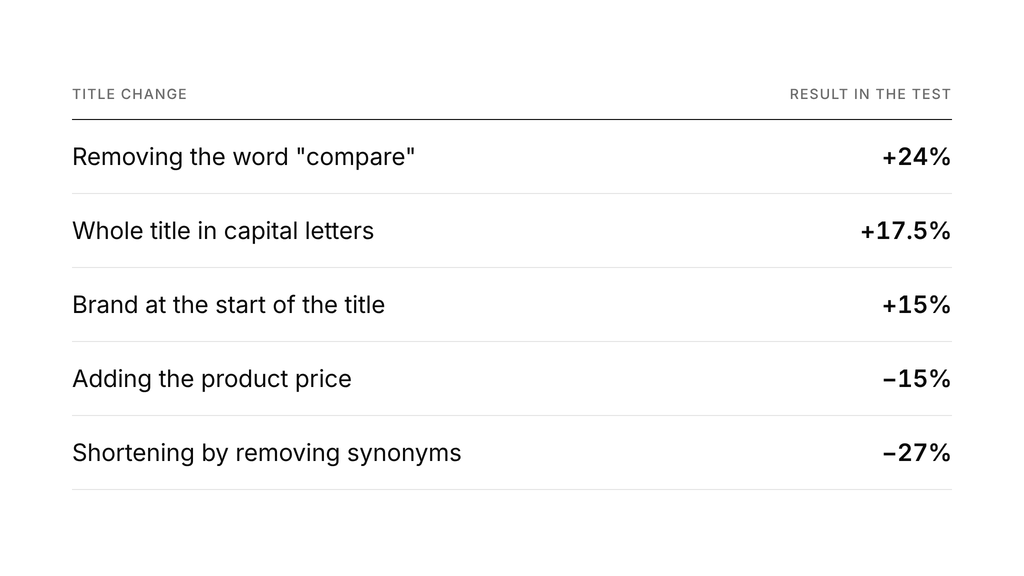
These are single test results, not rules. His advice: change one thing at a time, set success criteria up front, and run SEO tests for at least two weeks.
You can only test what you can change. When you own your storefront, title templates, page layouts, and structured data can be adjusted and measured without waiting on a platform roadmap.
One conclusion
Five talks on five different topics, and one thread ran through all of them. Shoppers want options, data has become infrastructure, and the only reliable way to improve is to test. All three get harder when the platform decides what you can change.
Rigid setups are not just slow. They are a risk.
Thank you to eCommerce Croatia, the speakers, and everyone who stopped by our booth, spun the wheel, or just said hello.
Missed us in Zagreb? If you are hitting the limits of WooCommerce, Shopify, or Magento, book a Medusa demo. We will show you the same thing we showed at the CRO Commerce booth.